
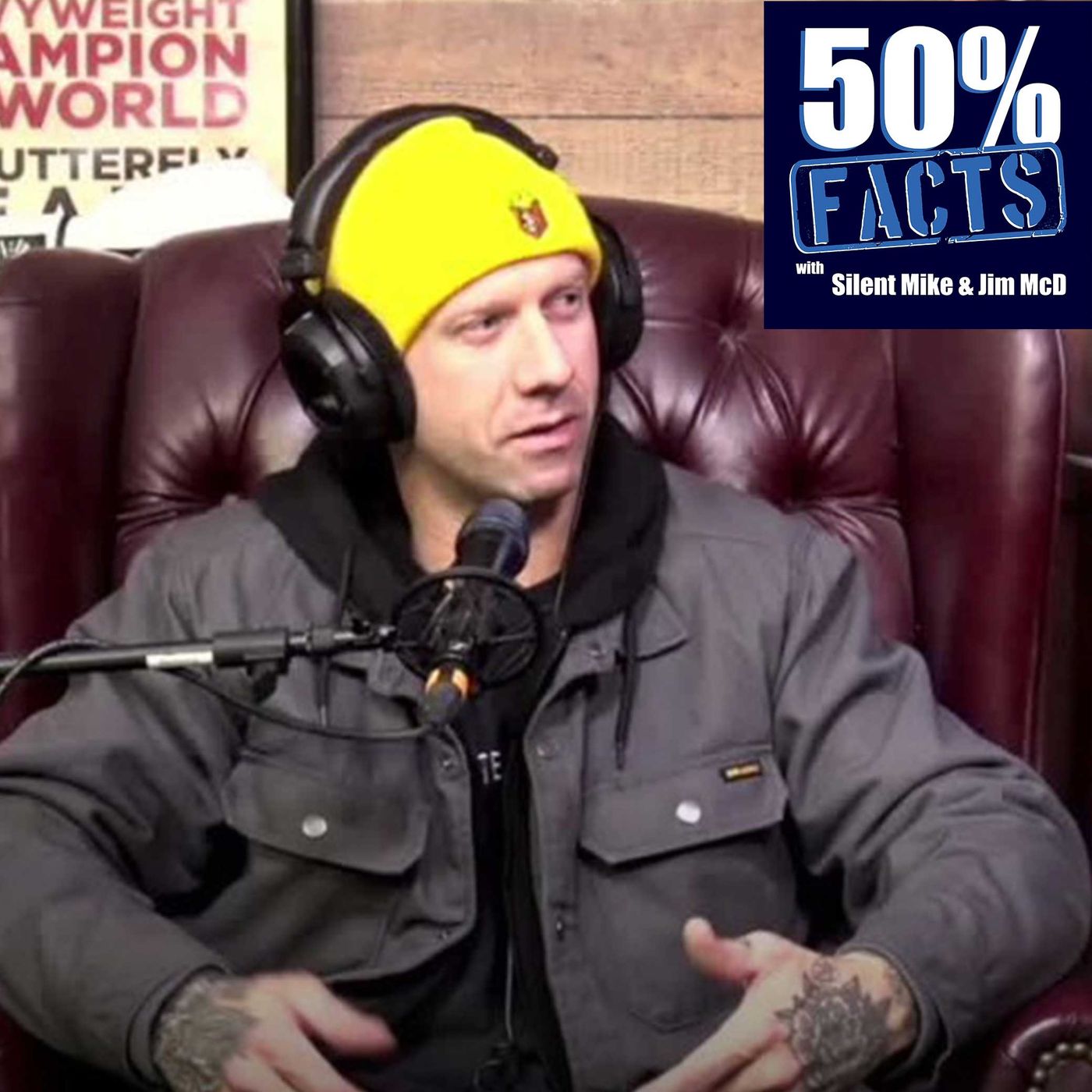
Creating safe outlets for coping with trauma| Guest: firefighter Chad Dillion

 Apple Podcasts

 Spotify

 Goodpods

 Audible

 iHeartRadio

 Podchaser

 RSS Feed

 Castro
In this conversation, Jim McDonald and firefighter Chad Dillon delve into deeper topics surrounding mental health, community, and self-expression through photography and music. They discuss Chad's journey from firefighting to founding the nonprofit, Ruted Above, aimed at fostering community connections and safe spaces for expression. The conversation highlights the importance of therapy, the impact of culture on personal growth, and the role of art in healing. They also touch on the significance of manifesting goals and the influence of music and tattoos in their lives.
You can find Chad and his new non-profit on Instagram at https://www.instagram.com/ruted_above/
Chapters
00:00 Reconnecting and Reflecting on the Past
03:00 The Journey into Photography and Culture
05:53 Exploring Mental Health and Personal Growth
09:12 The Impact of Community and Expression
12:07 Building a Nonprofit: Rooted Above
15:05 The Art of Photography and Its Evolution
18:01 The Importance of Community and Connection
27:04 The Art of Photography and Personal Expression
29:16 Building Community Through Events and Nonprofits
32:06 The Search for Belonging in a Negative World
33:50 Mental Health and Identity in First Responders
37:41 The Impact of Technology on Human Connection
41:18 Tattoos: Personal Stories and Meanings
45:02 Manifesting Goals and Building Community
48:26 Music as Motivation and Personal Growth
Join our Discord for free at goodcompanydiscord.com!
Check out our gym (Third Street Barbell) at ThirdStreetBarbell.com https://www.thirdstreetbarbell.com/!
Check out our podcast website: 50percentfacts.com https://www.50percentfacts.com/
50% Facts is a Spreaker Prime podcast on OCN – the Obscure Celebrity Network.
Hosted by Jim McDonald (@thejimmcd). https://www.instagram.com/thejimmcd/
Produced by Jim McDonald
Production assistance by Sebastian Brambila.
Theme by Aaron Moore.
Show art by Joseph Manzo (@jmanzo523)
Check out our gym (Third Street Barbell) at ThirdStreetBarbell.com https://www.thirdstreetbarbell.com/!
Check out our podcast website: 50percentfacts.com https://www.50percentfacts.com/
Become a supporter of this podcast: https://www.spreaker.com/podcast/50-facts-with-silent-mike-jim-mcd--5538735/support.
0:10 We're in. Okay, welcome back. I took a couple of weeks off here for a variety of reasons, but I'm back with Chad Dylan to talk about maybe some deeper topics than we sometimes get into on on the show. Chad was telling me a couple of weeks ago about a very cool sounding a nonprofit project that he's working on from his from his experience as a firefighter and life. So so tell me all about it.
0:53 Yeah, So it started with my best friend Tim Brown. We're both from Modesto, Calm, born and raised in two and nine. Okay, yeah, I grew up in like Mantica fil Camp. Yeah yeah, yeah, yeah, So we grew up skateboarding. We met like maybe we originally met in fourth grade, and then probably around like sixth grade, we started skateboarding and that was that was our life for from sixth grade till beginning of high school. I would say, and there was four of us that specifically our friend Josh would skate to my house, and then Josh and I would skate to Tim's house, and then all three of us would skate to Mike's house, and then we'd skate to school and we'd usually skate like a parking lot like at Loloma before school, and then we would skate to school and then sometimes before Downy. But yeah, that was that was how we all came together and Tim andized relationship just kept holding on throughout the years. I'm still friends with Josh, but I'm really close to Tim. And what happened was is around I think it was twenty and eighteen, we went on our first euro trip together and we weren't really into photography at the time, but we had our phones and were the course of being there and traveling to different places, we started like getting into our phones and like taking these pictures and stuff.
2:06 And we realized that Tim did that, you know, he wanted to get into photography. So during COVID he kind of put me onto a film camera and so I went up actually over to Photosurce on Elvis and bought my first nikon FM two. And so what we started doing is we started an Instagram page. And what we realized is we just wanted to take pictures of life, like we wanted to take pictures of people just doing things and and what it really comes down to is culture. And I look at culture as four different banks. You know, so food, music, brotherhood, and that could include women and community.
2:48 And so whether it's like we're shooting low Riders or we're shooting you know, deal to del with Moritos in the mission, or you know, powerlifting me, you know things like that. Like it's just people pressing themselves, right, And that's what it comes down to is because I think that you know, healthy masculinity is being able to express yourself and whatever fastt that is. Yeh. And what I have noticed over the course of my years in the fire service is some men that just don't know how to express themselves. And it's it's a tough thing to watch. Yeah, for sure. To backup for just to say, ye, my my wife's uncle, her aunt's husband taught it Downy for years and years.
3:32 No way, yeah, yeah, yeah, we graduated oh. Five, okay, yeah he he retired a few years ago through four years ago. Yeah. We would skate the staircase on the front of Downy for you know, like for hours and hours and hours, and uh we had the big camquorder. Oh you know, we recorded, you know, we had like the fish lens and you know, we were always skating everywhere and it was it was such a such a good time to be a kid, like growing up there. It was. It was really cool. When I was in New York City about a year and a half ago, we went to this museum in Queens called the Museum of the Moving Image, and there was a whole section on skateboard videos, like the evolution of skateboard videos. Oh my god, I had no idea, but they actually showed like the cameras. It wasn't just examples of the cameras. It was the cameras that these guyshues. Yeah, and how they started off on you know, VHS tapes and and you know, graduated DVDs and then graduated to streaming stuff, and like they made frickin' movies. They made like you know, feature link documentaries.
4:45 Yeah, yeah, yeah, yeah. It was I mean about skate culture totally, and like. You know, something that went along with that is we had you know, I had my first house. I bought a modesto at twenty three. That's when the that's when the housing market had plummeted, and so I was lucky enough to get into a house at an early age. And we had a friend named Ricky Kitt and he was a local MC and he did graffiti. And at that time, my friends were really important to me. My dad was going through some alcoholism at the time. My parents had to have a tough time, and so I just felt that my friends and I kind of were help raising each other at the time, and so I had him paint on my wall friends or the family would choose in West Coast Sick graffiti style. And I've kept those pictures on my phone for years. And so what I want to do now is I want to make a shirt and that's going to be on the front of the shirt, and so we're gonna put out a limited limited edition of that under the Root and Above brand.
5:44 Nice. That's great, Yeah, yeah, yeah, that's it's something that I think it would be really cool. Yeah, that's great. Yeah. So you made these friends, yeah, and you're still hanging with some of them. Yeah. And how did that lead toward what you want to do now? Oh? Yeah, So basically what happened was is Tim and I we went on two euro trips. We went to Prague, Budapest brought us Lava and Vienna on the first one, and then on the second trip we went to Berlin, Copenhagen, Lisbon and Amsterdam. That's an all over the place one.
6:24 Yeah yeah, yeah, yeah yeah. And the juxtaposition of Berlin and Copenhagen was crazy. Yeah yeah and Lisbon yeah yeah for sure. And you know, most people when they choose their first European trip, they don't usually choose like Eastern Europe. No. No. But what was really cool about that is we went to the bathhouses. And funny story about that is we were able to we kind of learned how to like regulate our nervous system in it. We didn't realize we were doing at the time, but you know, you're going to the cold plunge, where we were like, hey, let's see if we could do five minutes in the cold plunge. We're like just in there, you know. Then we go in the then we go in the sana, you know, and then we go in the you know, back to the cold plunge. We did that all day, and we did it several times, you know, over several days, and when we would leave, we just felt like a million bucks. We're like, man, we feel awesome. And that's something that I've been reading about now with nervous system regulation and healthy dopamine reward. You know, the more you press on pain, the more the reward system is. In the end, it's not cheap dopamine, you know, it's kind of earned social media dopamine exactly, or porn or or cocaine or whatever, you know, or food or whatever. And you know, unfortunately and first respond to world people, you know, seek cheap dopamine because they don't know any different, you know.
7:41 And I did that for a long time. And I imagine this it's a little bit of a sometimes a little bit of a survival strategy, of course, where you just feel like you're so beaten down, of course, that you're looking for whatever is going to solve the moment that was. That was me for a good eleven years. Wow. When I so, I got into the fire service when I was nineteen. I started with the state in Mariposa. I worked for It was called CDF at the time, but now it's CalFire. I did six seven, two thousand, I skipped two thousand and eight, and then I went back and oh nine twenty ten. And then at the time I was also working for MR. And I worked seven years for MR in Stanslaus County, and then I did two and a half years as volunteer with SLIDA, and then in twenty twelve I got picked up at sac Metro and in twenty thirteen, it was June thirtieth, twenty thirteen. I was about six months on. I was waiting for my first fire. What I mean by that is I had been to a ton of wildland fires.
8:43 That was That was my whole that was my whole history. I had never been to a real structure fire. And I had the training in the academy, but never never done the real thing. And so I was just waiting and wait and wait, and finally that day came and it was a rip in fire. And what happened was there was a series events that happened, but I ended up getting burned really bad on my ears and my hands, and at the time I didn't know how to deal with it. Mentally, my I was living with my girlfriend at the time and I was unable to be have an honest communication with her. I just kind of drank about it, looked at porn about it, seeked every sort of dopamine, cheap dopamine that I could, and it ultimately, you know, a self sabotage of the relationship and I went down a wormhole for many years, and then of course COVID happens. Yeah, and then it went even worse, right, And so you know, I got engaged this last summer and my fiance Katie, once she came into my life, it made me. She told me a piece of advice that was so important because I was helping out a friend.
9:58 I'm a part of peer support at work, and I was taking a friend down to a down to rehab that I worked with at the time, and I saw a lot of myself and him and when he came back, we had some conversations and the conversations that he didn't want to hear, and it was really it was really bothering me, and it was it was kind of hurting my relationship with Katie. And so she gave me the great advice anybody ever could. She said, Hey, you have all this great information for your friends, but what if you use that on yourself? And I mean it completely changed my mindset. Yeah, that's a hard thing to do too. It's so much easier to have perspective on somebody else. Yeah, it took me a lot of courage too. It took me about maybe like five or six months to really look in the mirror and say, Okay, I want to change my life. And that's when I decided to strip away alcohol. And then I started stripping away all the dopamine, all the cheap dopamine I could. And then then I started going to therapy regularly and I got really honest with her and it changed my life. And yeah, a.
11:06 Thing about about therapy, like like in my own life, I I members of my family could have used. It, for sure. Absolutely my sister wouldn't that I don't really have much relationship with anymore as a drug addict, and would probably not be a drug addict had my dad been not such an asshole about about, you know, refusing to think that there was value to therapy. And he not only did he basically keep her from it, that he he instilled that in her head. And you know that was I mean, there's a big difference in our age. And I was out of the house by the time this was happening, and when I needed therapy, it still took me years to get there. Yeah, I mean I went.
11:52 I went for for five years and then eventually my therapist said, look, you probably don't need to I was. Like, thank you. Okay, Yeah, I can graduate. Yeah, and it's always something that you can revisit. Yeah, life. There have been moments where I thought, yeah, maybe I should go back, and I think we'll see. Yeah, but that's what's so important about the gym and community and things like that. You know. You know, I come from a from a family of firefighters, Irish Catholic. My great uncle worked thirty thirty one years in Oakland. My dad did thirty years in Modesto, and so technically I'm third generation and it's alcoholism is deep in my family, deep in my family. Yeah, and it was just something, you know, when I got burned on that fire, nobody offered.
12:37 There was just it just wasn't around. Nobody was like, hey, do you need therapy? Yeah, you know, it was it was tough, definitely tough to get back in the saddle again after that, And yeah, it was a it was a tough journey for sure. That's a that's a fairly common human situation where you were if literally burned but also burned by a situation. It's one of the things that they talk about in terms of athletes, if you get if you get injured as an athlete, it is difficult to get back to doing the thing that you were doing that injured you. Yeah, exactly, and people become much more conservative than they really need to be about about risk.
13:17 Oh I could completely. I mean imagine like cutting and then you know, you take your a cl out the confidence to do that again like the way they did it one hundred percent before. It is probably like that's a mental thing. That's a mental thing. Or same thing with weightlifters, you know, shoulders, shoulders or your elbows, you know, things like that, like yeah, for sure, for sure, And. It is I mean it really I feel like it just requires somebody to be able who knows what they're doing, to be able to step in and figure out what works for you to step forward toward toward that risky situation again and without feeling like it's all just going to go to hell. Yeah, but we're I mean, we're risk a versus people in a lot of ways, not one hundred percent, and not everybody is risk averse obviously, or we wouldn't have Red Bull, you know, I mean.
14:08 Yeah, yeah, yeah, yeah, I. Mean uh it uh yeah, you know, it's it's it's super challenging. But you were you were able to come back and and yeah, face that over time. Yeah, I think I think it was rough. You know, I didn't have, in my opinion, the leadership that I needed at the time. So my thing is now is I'm back in school for psychology mental health, and what I want to do is I'm an engineer right now, but when I promote to captain eventually, I want to be the captain that I wish I had. You know. That's actually that's a really good that's a really good goal. Yeah. And and and then on top of that, you know, the way down the line, maybe when I retire, become a therapist for first responders, you know.
14:50 That's yeah, that's that's a way to give back needed for sure, needed for sure, and and it's never going to not be needed. That's the thing. It's it's it's is a condition of the of the job. Yeah. And if you look at the arc from from you know, the seventies all the way till now, the call volume has just gone up exponentially, but the system hasn't really changed. So it's like it's changed a little bit. But like, man, it's so inundated. It's just it's just over the top and then going back to the expression piece, that's partly why we you know, our our core values, our core values are culture, character and expression, and so that with Rooted Above, that's what we just believe that, you know, expressing yourself, whether it's waightlifting, powerlifting, photography, art, djaying, whatever that is. Man, it's such a release. It's such a release.
15:46 So tell me about Rooted Above. I mean, that's that's what I want to do, or we want to do, is we want to create a nonprofit and what I envision it is, I want to create safe spaces for people to dance. Because I'm also DJ, a local DJ. I'm a resident DJ for Calling Response, which is a local party in town. And I shouldn't call it really call it a party. It's a dance event, and it's a way for the community to connect. I think a lot of times people look at dancing or or hanging with your friends like that as escaping, but we look at it as connecting. And so I want to buy a sound system and we want to start doing some gatherings and pouring into that. And it's not really about it's not really about profiting for money. It's just about creating safe spaces for.
16:35 People and having an expression for for what you're feeling. That's exactly community needs. That's exactly it. Yeah, yeah, and so we're gonna I'm gonna be looking more into that, Like I'm meeting with a lawyer in January, my tax person, and but you know, I've got the business cards and working on the shirt and things like that, and we've got the Instagram and we've got a domain. So yeah, yeah, the the the process of setting up a nonprofit takes a little while. Yeah, that's right here. It takes a little while, and there are certain steps that you have to go through. I went through it with an organization and I and I fucked it up, clearly fucked it up because they didn't fit any good category. So I had to just got to make something up.
17:16 But a couple of years later they had to read it with somebody else. But they were desperate to get it going at the time. And that's it was like I was, I was just you know, the consultant that came in and said, Okay, I don't know if this is right, but it's going to be done. So yeah, but it. Yeah, it's a it's a it takes a while. To get the official blessing from the I R S to to to be a nonprofit. But yeah, you know, they're, like I said, all kind of rules you have to follow to get to get there. That's right here. I was actually, ironically enough, I was talking with a lady last night and her son started a nonprofit in Oakland, and she was telling me about that as well. And so everybody that I've talked to about it, they say, hey, you should probably talk to, you know, somebody who actually has one, because there's so many steps that you have to go through.
17:58 So yeah, so many records to keep, so many things to do to be able to show as evidence that that's what you're doing. Yeah, so I look, I mean, I look forward to learning more about it, and you know, we're excited. And photography is just such a special thing that we like. I think that like being street skaters back in the day, the way that we looked at things, it causes us to look at things a different way as photographers, you know, the way we look at lines and things like that, and like the way we look at staircases and just symmetry and things like that. It kind of reminds us of being skating, skating even though we're not skating, and so like we'll meet up because he lives in Turlock and I live in Sacramento obviously, and so we'll drive out to San Francisco. We'll just go on on walking talks and we'll just you know, bring our film and go shoot and chat it up as friends and it's a good time.
18:45 Are you shooting exclusively on films? Yes, yeah, both of us are yeah. Yeah. Seabast like that yeah, and Kevin like. Oh yeah, it's because of so chat actually gave me an Olympus point and shoot, and then Kevin was gonna go to Japan and I was like hey, I was like yeah. I was like I had I did one role and I was like, oh, bro, it sounds like drugs. I show one role and I was like, oh, this is fire. Yeah. I was like, hey, bro, here here's your you're a free role. Go to Japan if you want, buy some more roles and just start shooting. It's fun.
19:25 Yeah, it's like an addiction. He was like, we'll see, we'll see. And I think he bought his own camera. He's buying like four. He ran the marathon the other day of the California International. He had his camera in his pocket. I'm not I did not see any of the pictures that he took. That's awesome, he said. They're probably going to be like, you know, shaking. Yeah, that's so cool. But yeah, one thing, one thing that we love about film is like we just live in this age of instagratification. And the thing about film is, you know, you don't have a screen to look at. You know, you're in the viewfinder and you snap a shot and that's it. You don't get to you don't have to get to look at it a million times and redo it. You know, in our parents' day when they would take pictures, it was just set up, take the picture, done. And so what's cool is you get to over time you start to remember your settings, and then when you get the film back, you go, oh, I remember, I remember what I had my apertra at, or remember what I had my speed at, or was I pulling or pushing the film? And then you get to adjust as so and then you know, it makes you a better photographer. And I think that I just think there's such a I think are the generation now, in the younger generation, they're looking for something with some a little bit delayed gratification I think is good for people.
20:36 It's a little bit. Like the resurgence of physical media totally. The records, for sure, records, CDs, CDs. And DVDs. Yes, and I don't know about I don't know if vhs has ever come back, but the DVDs, like it may not, like it's it's actually sort of a thing now to you know, collect like a classic version of something that came out on a on a DVD like early days, but also to get the four k UHD version and you know, run a compare contrast essay on it. Yeah, yeah, I think it's amazing. Yeah, I I you know, I had a tiny, little instematic camera, my first camera. It just it was literally this big. It was like it was it was about the same size as a as a you know, a small iPhone like an se but fit like three times this thick.
21:26 Yeah. And eventually, and when I was going into my senior year of high school, I bought an SLR for the first time, I had a Minolta and I took a ship ton of pictures for a long time. I still still have. Do you still have it? No? It died it sucks that it died, but yeah, yeah, no, I I loved that camera and I did love shooting on film. I haven't done it in years. I haven't done it since that camera died. Well, I mean, you know, Photosaurce is a place in town. They they sell cameras. Passed it every time I go to home. Yeah, they're really cool people out there. Yeah, and then Mike's camera's cool too. But photo Source, if you're looking for a camera, they're They're a cool local place that they They're really nice there.
22:06 I know. They do conversions too for for video, and I have just like reams of a video because that's that's what sort of the next thing is. I got into shooting like family videos and stuff like that. It's so cool. But I just aw this raw video and then I have to edit it now and like yeah yeah, and just and then converting it. I bought a camera to convert it with because the original camera died and that died, and so it's like and I need to be able to send this stuff off to somebody while these these technology still exists. Yes, it's not like moon landing technology that they can't be recreated. Yeah, yeah, now and then and we were talking about like looking at people's faces and stuff. And that's how actually I got into powerlifting. Yeah was I. I was invited to the APF California State Meet in two thousand and five. It's like January two thousand and five, I think, and or maybe it was two thousand and four. Anyway, one of those two and it was here here in Sacramento. Would have had the Red Lion when it still existed, And it was the expression on people's faces when they would approach the bar, what they look like during the lift, their expression afterwards and they got the lift, they didn't get the lift, whatever, you know, like that, that's where my hook was. And that's when I started shooting shooting powerlifting.
23:19 That's awesome, What a cool experience. And yeah, it's I would not be sitting here now if I'd not done all that stuff. I'm sure I would have made a lot more money doing other things. Yeah, but you know what, money is not everything. Yeah, it's something, though, it is something. It is something. But but I think I heard this quote the other day. It was like, you know, you retire, you retire with tell me ten million dollars, but you have no friends you're broke. Yeah, you know, and I think a lot of people are just chasing that rabbit and like they're not realizing that community is everything. No, I think that's true. Also, like as you get older, developing community is the hardest thing to do it, like, you know, especially like it's hard to it's hard to find peers. Yeah, and so like all of your friends become people who are decades younger than you, which is where I am most of most of my friends. Yeah, yeah, yeah, and that's I mean, that's true. Here. There's like I don't know a couple of members that are in my age cohort, and that's you know.
24:15 But the range here of age is pretty pretty good. It's pretty good. It's pretty broad, but it but if you look at the like the average or the median or whatever, it's pretty low. It's yeah, it's you know, twenty twenty five is yeah. Okay, that's the that's the average, like twenty four twenty five. I feel like I'm old. Here, well not as Almo as me, but yeah, but no, that's that That's what what hooked me. That's amazing. I could throw this out of the way here, this is this is my laptop support when we're talking to the the advertising company zoom calls with the advertising company. Yeah, no, that's that. That's what hooked me, and that's what kept me going and and and I was like, I always loved film, and I if if if there were no uh well, if I had known how little money I was going to make it, I probably would have stuck with being a film major because it was the coolest thing.
25:19 Yeah. Eventually I took a year off and then said when I went back and went, I'll get a business. Agree, I might be able get a job from that. Yeah. I wish I would have got into it a lot earlier, but you know, is what it is. But I mean, I'm so hooked now. I mean, we're both we both love it so much, you know, And it's really cool to see people. Every now and then someone will say, hey, look what I got and they showed me the camera that they bought. And then now they're getting into it, and it's just it's just a really cool thing. And Timson is getting into photography. He's got him a camera, and uh yeah, it's just it's cool for kids to see actual cameras because you know, so many kids, uh you know, you ask them to take a picture and they do something like you know, they're like, oh like this, you know, rather than you know, Yeah, it's just such exactly.
26:06 It's such an interesting thing how they haven't grown up with the cameras. Yeah, they haven't. They haven't figured out that most pictures are. Shot landscape, yeah exactly, portrait yeah, or disposable cameras. I mean those were so much fun. Yeah. Yeah. My my younger son got into photography pretty early too, and he's he's still a really good photographer. He just doesn't do it very much now he's teaching, but he's taken some great stuff. We have some of his photography's hanging in our house. It's like, you know, he he there he would go to just like the craziest things, you know, we go to like these big events that would just happen, you know, downtown or whatever.
26:47 You know, that's the best to go to as places that I don't even really know about him, Like, but this looks awesome. That's the thing, you like. Yeah, I mean you have to know the right people to get into those places to do to do those things. Yeah, there's like you know, there's there's like there's a fire dancer guy, and there's you know, there's like a bunch of really cool stuff that he took over the years, and that was all. I think that was all on film. Honestly, I'm pretty sure. I don't know. It was split somewhere on the one because he actually took photography classes. Okay, so I think some of it was some of it was digital, but a lot of it was was on film, Okay. Yeah. I really love doing also, like dance events like discos, things like that, like the low light with the film camera because it's no flash, so you could kind of get the mood of the night without being overwhelming while people are enjoying themselves. I've got this old photography book called Disco and it's like a Studio fifty four back in the day, and it's really really cool. It's really really cool. Yeah, it's it's it's it's a cool era of pictures.
27:51 That's that's amazing. People all express themselves, all different walks of life, like just enjoying their time. Yeah yeah, he uh, he really dug it. And then somewhere along the line, just like life kind of in he's getting a master's right on in in education. In my in my mind, at some point he's going to be teaching. Photography someplace because he's amazing. He's got a really really good eye. And you know, people surprise you, like with some people have a great eye and some people just don't. And it's a little bit it's a little bit hard to teach. It's it's like, yeah, like composition, composition, yeah is Yeah. My mother in law, who's eighty seven, has amazing composition. She hand her a camera and. She yeah, it's just natural, just natural.
28:34 Yeah, yeah, I don't. That's how my fiance is. Yeah, she's an amazing photographer. It just comes so natural for her. Yeah, yeah, yeah. And it's also cool to see like, uh, like when Tim and I go and shoot together, we'll be shooting the same thing, but but we have a different viewpoint, like like he sees it a different way than I do, and so when we develop our film, you know, we get to see like the different different angles or different viewpoints from that same image. And so that's also pretty cool. How everybody has everybody views the world a different way, is what that is. At least that's how I interpret it. I've I know, I've been to photography exhibits where it's the same scene, but it's a bunch of photographers and so it's all their interpretation. Yeah, exactly. Yeah, yeah, no to the.
29:14 Same Like even if they took the same picture, that's not what you're gonna see displayed. You're gonna see the variation. Yeah, yeah, yeah, yeah, it's cool. Yeah. So what what kinds of events do you see yourself doing with your with your nonprofit or services. Yeah, I think dance events for sure. I've got ideas for later down the road, like maybe doing like a record shop or some things like that, or like a photography store or something like that. But also I would love to come shoot like a power lift you meet here, you know. I've done the low Writter events in Sacramento. Yeah, like you name it. I mean, you know, outside of that like food event or whatever whatever, we basically food, music and community.
30:05 Really yeah, what kind of reaction have you gotten from your coworkers, because you obviously it's just changed a lot. Yeah, fairly fairly recently, right, I mean. Yeah, yeah, well I just hit a year variety. Yeah, so that's been pretty cool. But yeah, I think they haven't had a really time, Like I'm just we're just starting to kind of like push it a little bit more. And then I've been off of work for a little bit for a risk injury. I've got a sprain in my left risk a gangly on syst so I'm seeing a specialist on the seventeenth for that. But yeah, I mean, like at least all my friends in the fire department think it's really cool. I think there's a need for brotherhood, especially in our world, and so I just figured, you know, I might as well have something that people could tie into.
30:56 Even the other day, I was checking out at the Save mar or the Safeway off Alpara Hambra is a safe work and Safeway safe Way, safe Way, Safeway Safeway. Yeah, so I was checking out there and I was going to a party and I had the non alcoholic beers because I still like the ritual of tasting a beer to party, and uh, this kid sees me and he goes, I have to say, what's up with the what's up with the na's And he sets his beer down and I set up, well, you know, I had a problem with alcohol and cocaine for a while, and he goes, okay, he's a are you into hardcore music. And I said, yeah, I go to Aftershock every year. I like hardcore music. And he goes, okay, because you look kind of hardcore. You're kind of like a straight edge, And I said, yeah, I mean like I'm into I'm in the dance I'm in the dance community. And I and I like hardcore music, you know. And that's the thing. Tim and I like all sorts of music. We like all all all different types of of of communities really and and so when I was leaving, I said, hey, man, and we talked about a a for a little bit and things like that, and I said, here's a card, man, I go. Because it's it's really cool to feel like you're a part of something even though you're not with those people. And so that's kind of what we're trying to do with Rooted Above. But we want people to feel like they are a part of something, even though we might not necessarily be in the same vicinity.
32:09 So I think that groups like that too. I won't let me back up and say that, I think that there are so many people who are looking for some kind of belonging that they are too many people are open to the negative messages and not looking for the positive ones. And it's easy to find the negative messages. It's harder to find the positive ones. Oh yeah, especially with the algorithms on on social media. Yeah, everyone's in a turmoil all the time, and it turns into the desire for community turns into like a grievance kind of mentality, and and that's that's scary, And that it doesn't lead to good places obviously at all.
32:52 Or competition, yeah, and things like that. I mean, yeah, I would agree, I would agree. I think I think there's a lot of negative tivity and we're just trying to shine some positivity. Yeah. Really, Yeah, this is like I'm I'm obviously I'm I'm taking weeks off from the show as opposed to just grinding it out every time because I wanted, I want every episode to be something I'm I'm that I feel more passionate about whatever. So coming up on five hundred episodes, and and and I'm not sure, you know, I'm not sure when Mike can rejoin me or if he's even going to be able to, because life's a lot of life's happening, and I am really seriously thinking about tilting the show entirely into a positive, positive community mental health, you know, and away so so specifically from the fitness stuff that we've done in the past, just as I think that that it's needed and it's not not everybody who wants to listen to the manosphere, I guess's what I'm saying.
34:02 Sure, sure, well, I think I think it really ties it. I think mental health really ties into the weightlifting community. Yeah, in some aspect. Yeah, it's you know, it's people shouldn't pretend like it's therapy because it's not. But it is. It is an expression, is an outlet. It is an outlet, and it could be it could be an addictive outlet too. I mean when I in my CrossFit days, I had a CrossFit era yeah, and I was really addicted, yeah a lot. Yeah, And and it was it got real negative, like it turns toxic after it was toxic, Like I remember, you know, I would get back, I'd spend three four hours in the gym, and then I'd get home and I think I was in my late twenties at the time. I couldn't move and then I would just be bet up until I could get back to the gym. And that's all I cared about was you know, the times or my prs or things like that, and.
34:58 He just became your whole identity and became my whole identity. And that's that's danger. And that's another aspect that I wanted to say is in the fire department is there's just a lot of guys that unfortunately their identity is so wrapped up into be a firefighter. It's like it's a great career and it's a meaningful career, but it shouldn't be your identity because if the fire doesn't come for three months, four months, six months, and that's your whole identity, that's that's in your loss and your loss, your loss. Yeah, that's that. That makes it a markedly different thing from say cops and other first responders. Are you know, nurses particularly like eur nurses you know you know Josh, Yeah, Josh is an EIR nurse.
35:45 He's involved with mental health as well. Right, Yeah, they do. They do a critical incident response with their with their staff that also includes the uh Aermedics EMTs. Okay fires like a debrief. Debris yeah yeah, so people aren't carrying it with them forever and ever. You know, Oh yeah, I think that I mean I think that it's sort of been proven that the sooner that you can address those issues, the less likely you are to just carrying them for forever and ever, except for the certain kinds of incidents that really do stick with you. But it's like, even how do you deal with those in a healthy way? You know?
36:26 I mean, in my experience, even just talking about it to some aspect like even say, hey, you know what, that really sucked, you know or whatever. It doesn't mean you have to be so emotional about it. Let's say, I mean that's also okay too. But I think that that's where it gets a negative connotation in the fire service, as a lot of guys are there, you know, I don't want to talk about it, and so then it just kind of gets put to the wayside. But unfortunately what happens is it will eventually show it's it'll it'll just rise up again. Eventually you're going to drink about it, You're going to fight about it, You're gonna yeah, you're gonna cry about it. Yeah yeah later yeah, in a very yeah, because your spirit is broken and you just and you and you haven't addressed it. Yep. Yeah that you know that that's a a like built into a lot of careers. But your point about about the fire service, just all the waiting around. Oh yeah, just all the all the waiting around.
37:26 Where's the stops? It's all the time. Yeah, you know, nurses, it's all the time. Yeah. And there's different stations, you know, not not every station is the same. So we have we have stations that are really busy. We have the slower stations too. But I think the downtime the phones, really, man, I see, like you know somebody and I've been guilty of it too, is like you're so locked into your phone and your screens and you're not connecting with the guys that you work with or the gals that you work with. And I mean that in itself is a dopamine release. Is connected with human beings. We were designed to connect with each other, and sometimes guys just want to zone out and go back to their bunk and just stare at their screens. And that's over time. That's not great.
38:08 So do you do you have an urge to try to reach out to those folks earlier? Do you think this is him and this is why how he needs to be or her? I mean, I think I think checking on people is great. What I've learned in my experience is you can't force it on people. Everybody's on their own journey. But I think that like now, I just choose to be just be a positive example. You know. I even like reduced my Instagram. I only go on on Thursdays and Sundays. Now, oh that's actually that's a wise. Yeah. So on Thursdays I go on, I connect with people. If I want to put something on my story or like you know, do messages and things like that, that's what I do on Thursdays. If I want to do if I want to do a post, I do it on Sundays. And that's my outlet. That's the way I express myself, so you know, through my photography so or or music and so outside of that though I'm not on it, and it's really helped.
38:58 My life, I imagine. So oh yeah. If there there are things that I wish that we could go back and change the way they came into our lives, maybe not have them come in at all, or have them come in in a different measured way, the Internet period being one of them. It'd be kind of cool for the Internet like shut down at midnight or something. It was a meterred in some way that that that that was something of a disincentive to being on it all the time. And and have so much of our human interaction forced onto it into you know, really solo endeavors, right, I mean, like shopping used to be like you would go into a store and you would look at something with your hands and your eyes, and you would decide if you're going to buy it, and you would interact with somebody to give them your money or your credit card or whatever, and they would tell you to have a nice day, which you know, now it's a it's a it's an automated response telling you thank you for your purchase or whatever. It's not. There's no personal interaction at all. If anybody talks to you, it's a bot.
40:04 It's a chat bot that is programmed to tell you whatever you know. And and those some people experience those those personal things. It's not a personal thing at all. Yeah, And and like if I wish that that it had all been implemented differently. And social media is just social media can be so toxic and it is really reshaped our world in disturbing ways. Oh yeah, that and dating apps and we're constantly being sold something. I mean, like, you know, you go pump your gas now and there's a screen in front of me, I'm selling me something. I'm like, dude, I just want to pump my gas in peace. I don't want another screen at me. You've been to that one it's at sixty fift and folsome.
40:45 Right, Yeah, yeah, I was thinking of the one that Hal and far oaks. But yes, okay, yeah, yeah, they both have those. Yeah yeah, and it's it's like you could leave me alone really exactly, because yeah, you're not a real person. You're just a sales spot, you know. Yeah. Yeah, that's disturbing, it is, I got, I got, I got two more, two more questions, Yeah, sure. Thing one is you have a bunch of tattoos? Yeah. And I always feel like there's two philosophies about tattoos, like either there there they mean each one means something specific to you, or there's no meaning at all and you just like them. Yeah, where do you fall? And or is it a mixture?
41:28 I have a mixture? Okay, yeah, I think I think I'm a tattoo collector, so I look at it that way. But every now and then that means I just walk into a shop and I go, that looks freaking cool, so I'm gonna get it. Yeah. But but outside of that, I have a lot of meaning in some of them as well. But I do. I like, I'm a big fan of you know, traditional American tradition and Japanese. Alex Garcia is my current artist over at Saxony Tattoo. He's phenomenal, really great guy. And yeah, so that's where I fall. I think that sometimes it's cool just to just go do something wild, like just go do something permanent that that maybe you might have a regret about.
42:10 Yeah. Yeah, I mean that's my that's my philosophy on it. Yeah, I can I can see that. He said, I have exactly two. Yeah. The first one I decided to get when I was eighteen, and I got it when I was forty one, Okay, and I didn't decide It took me that long to decide what I was going to get. Yeah, and then actually just about a week and a half ago I had it. It was eighteen years old. Yeah, it almost like teen years old. And refresh she had a refreshed as Yeah, and. She's a wonderful job on it. It's peeling now, but it looks great. So lastly with that and the other one I have is just is a Star Wars tattoo that I got with my my bonus son, what I'm not actually related to, but and another friend of mine.
42:53 We all got versions of a Star Wars tattoo at the same time, moving in together. That was cool. Well that's a you know, another thing about tattoos. It is a time stamp, and you know it's it's a time stamp. Yeah, that's true. And so so every time I look at some of my tattoos, I know exactly where I was in my head at that moment in my life, and I feel like that's pretty cool. You know, I mean, and then for me there's a there's a meaning, but not a deep meaning of every one of them. But this one, I'm wearing tights because it's sucking cold and it's peeling. Oh yeah, that's cool. But okay, I see the one on the outside. Yeah that's uh. This is from the cover of Kingdom Come number four by Alex Ross. It's an alternate you know, it's an Elseworld's d C story and Superman has just been fighting with you know, DC calls him Shizam now, but it was Captain Marvel then, uh and has just kept a an atomic I'm not gonna be able to get that back down. Just just kept an atomic bomb from uh from destroying a big area with a lot of people. And I think it was in New York.
44:02 That's okay. It's a little bit of you know, like foreshadowing. Yeah. I love one of the one of the Avengers things, and he's like, its just like he took the brunt of this thing and he survived. That's that's the meaning to me, is like getting to the other side of a really bad situation. I love it. And it was getting to the other side of a really bad situation for me. And this one is just we we got these because Carrie Fisher died respect respect. There was a there's a reason. Yeah, there's a reason behind it. And it was cool to be able to do it with, you know, for you know, two other guys and get our own versions of the same thing. Yeah, I love that. I think. I think some of my tattoos there's been moments where I didn't really like them, but then it came full circle where now I love all of them. Yeah, And maybe that's a mental health thing where I I kind of had to go through it, and like, I feel like I'm in a really good headspace now, so I really love all my decisions I've it.
44:58 It's like, this is me, this is me, this is authentically me. On the way in here today I was listening to a podcast episode about manifesting. Yeah, and. I have not been the biggest believer in manifesting. Okay, why is that? Because it just seems like a woo woo thing, you know whatever, it did seem like a really woo thing to me. I'm a big believer manifesting. And listening to this thing. There's there are conditions around it. Okay, yeah, there are conditions around it for success. But it is successful a ridiculous amount of the time. Oh yeah, because if you if you align yourself, that's the key. I feel like that's the key word. You have to align yourself with whatever that is you want to manifest and if you manifest it. And what I mean by that is like, for example, when I was promoting an engineer, I took one hundred days off of drinking.
45:53 At the time, it wasn't before I was like sober completely, but I stopped drinking for one hundred days. Every day I wake up, i'd write my journal in the morning. I am going to be an engineer. I studied every day, I practice every day, and it came true. And so that to me was like me aligning but also manifesting in a way. I think that's true that they this episode that I have not quite finished listening to yet, talked about the fact that you can't just manifest something that you're not actually working toward. Yeah, that's exactly my point. Unless it's some silly thing like the weather or whatever, you know what I mean, and that's hit or miss or whatever. But you know, some people have success there. But if you're if you're actually working toward a particular goal, manifesting, it seems to work.
46:41 Well, yeah, it's like it's to me, it's like no different than praying for a good grade in school but not studying, probably not going to get a good grade. But yeah, they actually, actually they're starting a percentage of people who manifest things who are just like that. They slack off instead of pursuing it because they think, oh, well, I'm manifesting it, so I don't have to actually do the work. Yeah, but good work meets talent, with talent doesn't show up right like. This is correct. So my question to you is this, Uh, what would you manifest out of what you're what you're trying to do right now with with your with your nonprofit. Man, I just think that, Uh, Tim and I we just want to build community and good vibes. I mean, really that's it. We want to just we want to be the good influence. The good influence is that that we wish that we had when we were younger. Really, that's that's we want to be the men, the mentors that that we wish that we had when we were younger.
47:39 How many how many people do you see yourself reaching like in your in your manifestation? Man, I don't. I haven't even thought. I haven't. I'm be honest, I haven't thought about that. Well. Homework, homework, that's my homework for me. Yeah, homework for sure. Yeah. To be honest, we're just we're taking it step by step, and we wanted to be authentic, so we're not really trying to rush it. We're just trying to like in everything that we do, we want it to be you know, with thought and care, you know, that's that's important to us. Okay, you're actually one last silly question, all right, Carol, Okay, go to song, Go to song. What's the vibe? What? Oh yeah, what's the What am I getting ready for?
48:20 Hmm? That's that's very important. It's very important. Damn yeah, I didn't ready for getting. Ready for a set? Thank you? Thank you? What kind of set? Like like a pr or know I'm talking about like like you DJing? Oh, okay, getting ready for a set? Lately it's been I've been listening to albums straight through and lately, like when I played in San Francisco on Saturday, I was listening to Liquid Swords by jiz Oh and that was that's a that's a that's a good one. The specifically the song Fourth Chamber. In the beginning, he has got a quote from Showgun's Assassin and basically, I'm gonna mess this up, but basically it's like choose choose the ball or choose the sword. And what he means by that is, if you choose the ball, you choose to be a boy.
49:07 But if you choose the sword, you're gonna step up and be a man in life. And I think that that's what I've been kind of like at my age right now, I've been like thinking about that a lot. And you know who else quoted that was Louis Simmons and Westside Barbill. Oh shit, really in the documentary? Yeah? Oh yeah, yeah, you know I named that documentary. Wow, it's great documentary. I didn't know I was naming it at the time, but I did. I did. Michael's a friend of mine, the director, okays, a friend of mine. But yeah, I mean that album has been really cool early. And then another you know, I'm a big Tool fan. I love Tool. Yeah, but if I'm doing a pr like I'm having to get after it in the gym, Yeah, it's Kobla Khan okay, gooble con textas.
49:51 Yeah, see, best you have an answer this question. Ah shit. Recently I've been I've been listening to like a lot of I don't know, if you know who Vince Staples is. No, Vince Staples is like a long beach rapper Okay, yeah, so I like, for example, I've been biking like very often. Yeah, and I throw some of like his music on because it's like when I first started listening to him, you you, he was like street it's kind of Larry June. I guess you can kind of you can kind of West Coast. Yeah, West Coast, but more like Laka more La and like gang related that type of stuff. Yeah. Yeah, when I first started listening to him, it was like twenty sixteen, seventeen, but seeing like his growth from you can listen to one of his albums when he first started till like now, you're just like, oh shit, now he's making like movies, movies.
50:44 Yeah, the growth is crazy. Yeah. So like playing one of his earlier albums to one of his like more recent ones, I'm like, oh, and it keeps getting better and it keeps on getting it to me personally. That's pretty cool. That's that's I feel like that's there's only a few select artists in history that continue to climb like that. Yeah, that's cool though. Yeah, that's really cool. Back in the day, back in the end days, we had a like I actually I had lifted with him in the in the Bay Area and conquered too who would bring in like old school underground Oakland rap and played in here And you know, I'm not the biggest fan of rap, and I. Liked that stuff a lot. For some reason it just like it. I think it's just the level of authenticity. Oh so much rap is just like you know, posturing totally and crap, and this is like like, oh yeah, I believe that that that could happen. I believe that did happen. I believe that this is your life because it's real.
51:39 Yeah, they talk about it the way. Yeah, the emotion that it kind of gives off, and this is. Stuff that never caught anywhere other than just local, you know, like he would just have burnt CDs and come in with them and play it was amazing. Yeah, that's cool. That's cool. So my answer is something it just has to be something in my range, which is not odd so good. It's good to be king. Okay, Tom Petty, Okay, I love it, just totally. Just yeah, I love Tom Petty. It's just like goes this. It's it's there's this many notes, it's like this. Yeah, that's it. That's awesome. All right, Chad, Well, thank you very much. Where can people find you if you want people to find you? Okay? Uh, My personal instagram is Turquoise Drive and then it's rooted above and underscore is between the rooted part and above okay, but yeah, and we came up with that name because it means to be rooted above all else.
52:33 So oh okay, that's how we came up with that name, to be rooted above all else. That makes sense. Yeah, got that, sibas Sebastian underscore brand Bila on I. G I am at dj McNee on all the social media. This show is fifty percent facts for percent is a word and fifty is just numbers. See I say that because that's that's that's like social media and and the website don't let you use a percent sign. So anyway, I. Should probably mention, Uh, it's r U T D, not r o O T. That's what that's that's important. That's important, That is important. Yeah, are U T E D. I'll be sure to put that in the s. All right, all right, thanks, Okay, this show is fifty percent facts, where percent is the word and fifty is just numbers.
53:16 For fifty percent facts of the speaker of pri podcast association with our art media on the Obscure Celebrity Network and I will talk to you again later. Cool. Thanks man, that was awesome. Cool? Is that good? Yeah? Yeah? All right? Cool that I've never done this beforeant well